
Pep Laja recently surveyed 50 B2B SaaS CMOs from $50M to $1B+ in revenue and asked them what was keeping them up at night. The answer was, in his words, brutal: they're spending more to acquire worse customers.
Three issues came out on top:
- Customer acquisition costs keep climbing
- Their tried-and-true pipeline playbooks are falling apart
- They can't figure out how to differentiate
If you're a SaaS marketer, none of those should surprise you. They're symptoms of one underlying truth: marketing is harder than it used to be, and most teams are still trying to win with the playbook from five years ago.
Here's what's actually going on with each one — and what you can do about it.
Why customer acquisition costs keep climbing
CAC was the number one issue, and it's also the most predictable. It's mostly a function of market dynamics, not bad execution.
The B2B SaaS market is mature
SaaS as a category is roughly 20 years old. From the mid-2000s to about 2010, the space exploded — every manual process, spreadsheet, and pen-and-paper workflow got rebuilt as a software platform. VCs poured money in. Founders followed.
Now we're on the back half of that cycle. The obvious gaps are filled. Most large categories already have three to five well-funded players competing for the same customers. New entrants are mostly fighting to replace incumbents, not adding software for the first time.
When the supply of solutions outpaces the demand for new categories, ad auctions get more competitive. Bidding goes up. You pay more for the same impression. CAC follows.
Buyers also have too many options
The other half of the problem is the buyer's experience. They walk into the proverbial Baskin-Robbins expecting 31 flavors and find 31,000. There's no clear way to pick — every product looks roughly the same, claims roughly the same things, and the differences feel like color schemes and feature checklists.
When buyers can't tell products apart, they default to caution. They take longer to decide. They ask more questions. They request more demos. All of that compounds CAC.
How to actually lower your CAC
You probably can't lower CAC much through ad platforms alone. The optimization game there is mostly played out — every serious team is running good campaigns. Where most teams are losing money is after the click.
A few things that actually move the number:
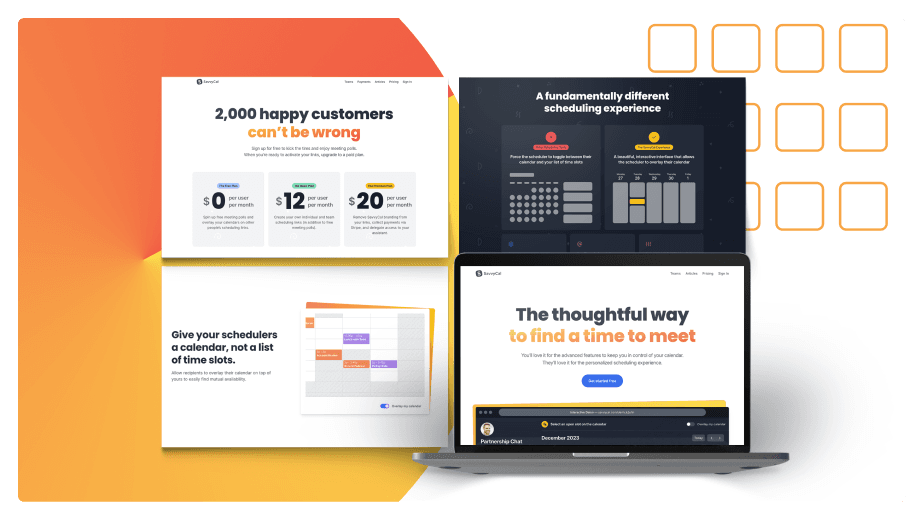
- Audit your landing pages. Most B2B SaaS landing pages convert poorly because the copy was an afterthought. Even well-funded companies ship landing pages that confuse rather than convert. Fix the message before you raise the budget.
- Trim the fat carefully. Cut spend that isn't moving the needle, but be honest about what's actually working. A common mistake is cutting harder-to-measure channels (brand, content) because direct-response is easier to attribute — and then watching CAC get worse, not better.
- Reduce friction in the buying journey. Free trials, freemium, concierge migrations — the trend is toward less friction, not more. If your buyer has to jump through five hoops to try your product, your competitors are quietly eating you.
Why your B2B pipeline playbook is broken
The second-biggest issue: pipeline. CMOs said their established playbooks are falling apart, and bigger budgets don't seem to help.
The old outbound model is dying
The model most large SaaS companies still rely on — high-volume cold email, gated white papers, SDR call-downs, AE-led demos, drip-nurture sequences — was built for a different era. It worked when buyers were grateful for any information and when fewer companies were running the same playbook.
Today every prospect's inbox is a war zone. Every demo request comes with a spreadsheet of competing vendors already loaded. Sales reps describe inbound leads as fastballs instead of t-ball — every conversation feels like an interrogation, not a welcome.
That's not a sign you need to optimize the existing playbook harder. It's a sign the playbook itself is the problem.
How to fix pipeline development
If your tried-and-true approach isn't working, the fix usually isn't more SDRs and more cadences. It's reallocating those resources somewhere they'll actually compound.
- Spend less on outbound coverage, more on product-led growth. Free or low-friction product experiences let prospects qualify themselves before sales gets involved. They also cut a layer of cost out of pipeline development entirely.
- Hire more engineers, marketers, and copywriters. The leverage now is in making your product easier to find, easier to try, and easier to understand — not in making more outbound calls.
- Audit lead quality, not just lead volume. "Spending more to acquire worse customers" is the giveaway in the survey. Often the pipeline isn't broken — it's full of the wrong people. Fix what's bringing them in, not how many of them you're getting.
Why brand differentiation is the hardest problem
The third issue, and arguably the root cause of the first two: most SaaS companies can't articulate why someone should pick them.
Every SaaS company looks and sounds the same
There used to be three or four degrees of separation between competitors in a SaaS category. Now there's 0.1 — same humanist typeface, same pastel gradient, same "human-centered" voice, same "we make X simple" promise. Every site reaches for the same vibe and ends up indistinguishable.
The instinct is understandable. Founders and marketers see what successful companies are doing and copy the surface. The problem is the surface is the part that doesn't matter. Real differentiation lives underneath — in opinions, in customer focus, in the things you refuse to do.
Differentiation isn't just marketing's job
Here's the uncomfortable part: when CMOs say they need better differentiation, they're often pointing at a product problem.
If your product team isn't opinionated — if engineers describe the product as "a tool that can do anything" — marketers can't position it. You can't write sharp messaging on top of vague capability. The most effective marketing teams work for product teams that have already planted a flag: this user, this problem, this approach, this trade-off.
If you're a marketer fighting for differentiation, your real fight is upstream. Get product leadership to commit to one customer and one outcome. The messaging gets dramatically easier from there.
How to actually differentiate
A few things that work:
- Be everything to someone, not something to everyone. Niche down. Pick the segment you'll obsess over. The reflex against this is fear of leaving money on the table — but vague positioning leaves more.
- Stop copying other SaaS companies. Your inspiration shouldn't come from competitors. It should come from things that genuinely excite you — brands, art, products in completely different industries. The great brands aren't invented from scratch; they're stolen from the things that make their founders feel something.
- Make room for artistic risks. Weird side projects, marketing experiments without obvious ROI, opinionated content that some people will hate — these are the things that create memory and preference. Hollywood movies built to make money usually aren't good. Marketing built to look like everyone else's marketing usually isn't either.
- Earn the right to your tagline. If your homepage hero says "the AI-powered platform for modern teams," you've described every product on the internet. Specifics earn attention. Vagueness loses it.
The pattern: marketing needs more chaos, not more efficiency
Read the three issues together and they all point at the same instinct: when things stop working, most teams ramp down, optimize harder, and try to squeeze more efficiency out of the existing system.
That's the wrong move. These are innovation problems, not efficiency problems.
Sometimes the right answer is to spend more, not less. Try stranger experiments. Make bigger bets. Do things that don't scale — talk to customers, run weird campaigns, write opinionated content, launch projects that don't fit neatly on the roadmap. Those things won't show up in next quarter's ROAS, but they're how you change the trajectory.
If your old playbook is producing worse results, more of the playbook isn't going to fix it. Throwing new ingredients into the pot might.
Frequently asked questions
Why is customer acquisition cost increasing for B2B SaaS?
CAC is rising mostly because the SaaS market is mature. Most major categories now have multiple well-funded competitors bidding for the same audience, which drives up ad costs. Buyers also have more options, which extends sales cycles and increases the work required to convert each lead. You can't win the auction game alone — most of the wins now come from improving the post-click experience: landing pages, messaging, and friction reduction.
What does it mean when a B2B pipeline playbook "stops working"?
It usually means the team is running tactics that worked five-plus years ago — heavy outbound cadences, gated content, SDR-led pipeline — in a market where buyers have grown immune to those tactics. Bigger budgets don't fix it. Reallocating budget toward product-led growth, content, and brand usually does.
How do B2B SaaS companies actually differentiate?
By picking a specific customer and a specific point of view, then refusing to be everything to everyone. Real differentiation rarely comes from features (those get copied) or surface branding (most teams converge on the same look and voice). It comes from product opinions, customer focus, and a willingness to take artistic and strategic risks competitors won't.
Should I cut my marketing budget if my CAC is going up?
Usually not. If CAC is going up but you've identified what's working, cutting budget can reduce volume faster than it reduces cost — which makes the problem worse. The better move is to audit where the inefficiency lives (usually the post-click funnel) and reinvest in the parts that compound, like brand, content, and product-led growth.
Is AI making CAC better or worse for B2B SaaS?
Both, but mostly worse in the short term. AI lowers the cost to build software and run campaigns, which means more competitors and more noise in the market. That puts upward pressure on CAC. The companies winning with AI right now aren't using it to scale old tactics. They're using it to ship more product, write better copy, and serve smaller niches with higher precision.